
TTF event video, slides and summary
I recently presented to the Transparency Task Force on the theme of member democracy in building societies.
The full video is here
The presentation explored why mutual organisations matter, why active member participation is essential to good governance, and how my campaign to become the first Member Nominated Candidate on Nationwide’s board ballot in over 20 years has exposed broader questions about accountability, transparency and democratic participation across the mutual sector.
The core argument is simple:
Mutual ownership only works when members have a genuine voice.
Without effective member engagement, mutual organisations risk becoming indistinguishable from the shareholder-owned institutions they were originally created to challenge.
The full presentation can be viewed below – with a summary of the content per slide, based on the transcript.
Google Slides (press S for Speaker Notes)
Alternative version

Slide 1 – Battling the Building Societies
Key message
The presentation is not really about Nationwide.
It is about a bigger question:
Why does member democracy matter?
The discussion uses Nationwide as a case study to explore wider issues affecting building societies and mutual organisations.
Slide 2 – Why This Matters
Key message
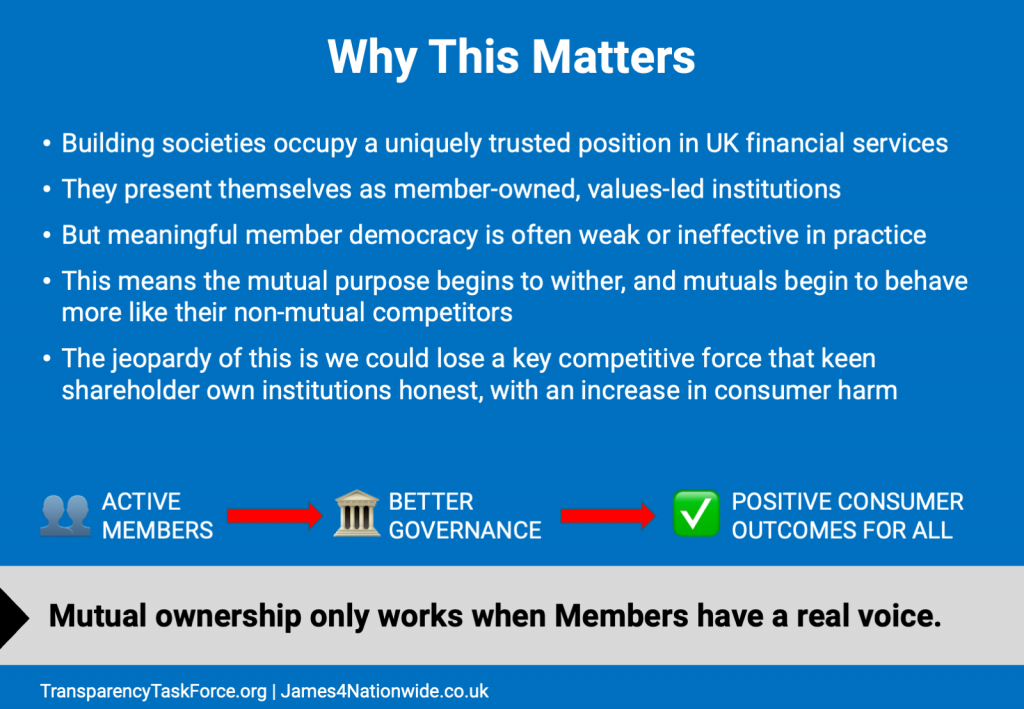
Building societies enjoy exceptionally high levels of public trust.
They are member-owned institutions that exist for the benefit of their members.
Yet in practice, meaningful member participation is often weak.
Core argument
Active Members
→ Better Governance
→ Better Consumer Outcomes
If member democracy becomes ineffective, mutuals risk losing the characteristics that make them different from shareholder-owned banks.
Slide 3 – The Chart That Changed My Thinking
Key message
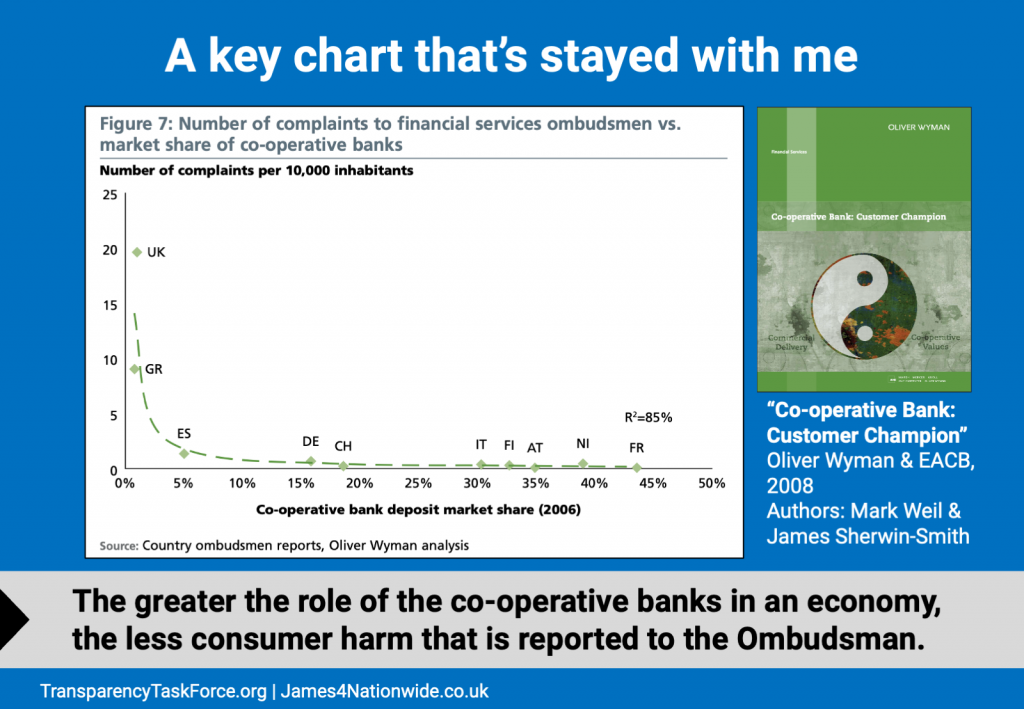
This chart comes from research I co-authored while working at Oliver Wyman.
It showed a striking relationship:
Countries with larger cooperative banking sectors tend to experience lower levels of consumer harm.
Why it matters
Mutuals do not simply benefit their own customers.
They create competitive pressure that improves standards across the entire financial system.
Slide 4 – My Background
Key message
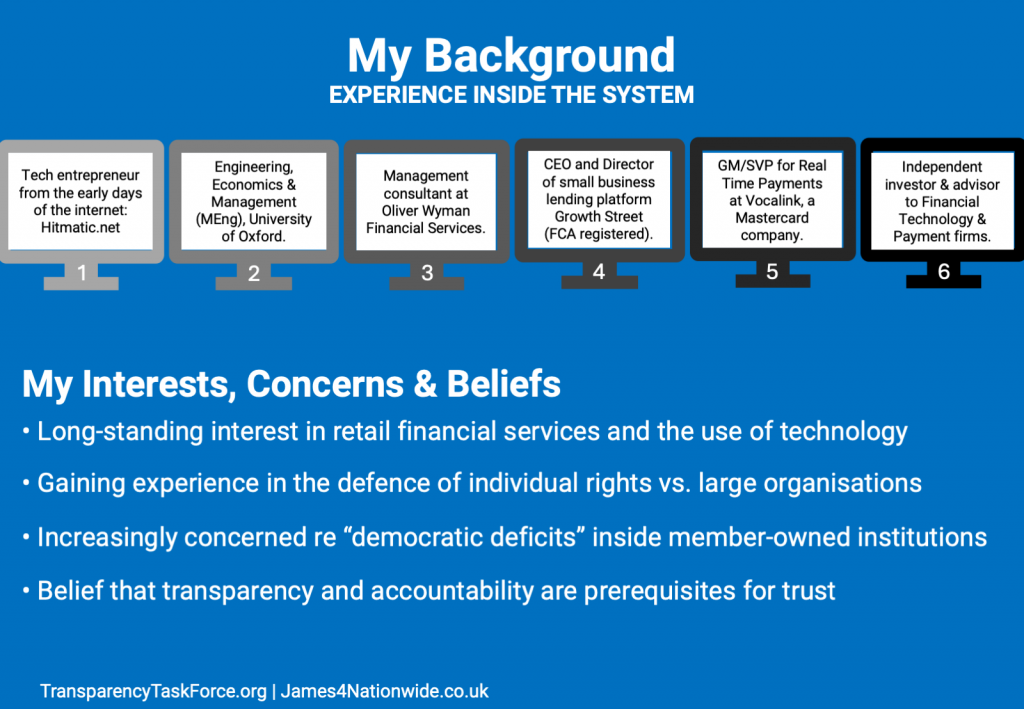
This campaign is not driven by ideology.
It is informed by experience inside financial services.
Highlights
- Oxford Engineering, Economics & Management
- Oliver Wyman consultant
- CEO of FCA-regulated lending platform Growth Street
- Senior leadership role at Vocalink/Mastercard
- Fintech investor and adviser
Core belief
Transparency and accountability are prerequisites for trust.
Slide 5 – Why Nationwide?
Key message
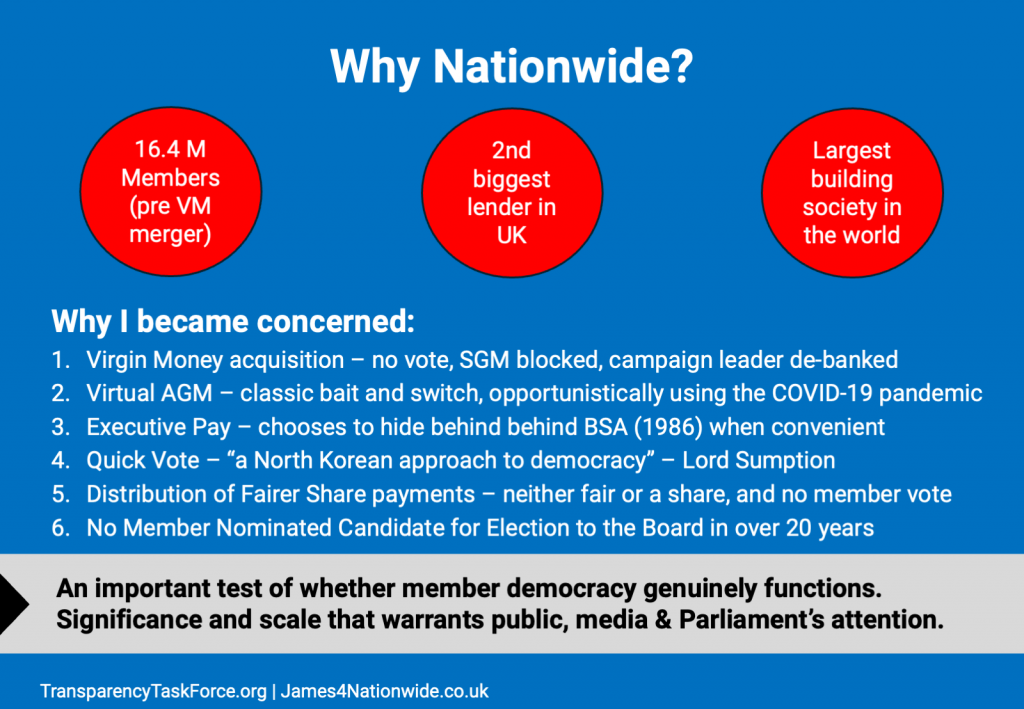
Nationwide matters because of its scale and influence.
Facts
- 16.4 million members (pre-Virgin Money)
- UK’s second-largest lender
- Largest building society in the world
Areas of concern
- No member vote on Virgin Money acquisition
- Virtual-only AGMs
- Executive pay governance
- The “Quick Vote”
- Fairer Share distribution
- No Member-Nominated Candidate elected for more than 20 years
Core question
Does member democracy genuinely function at scale?
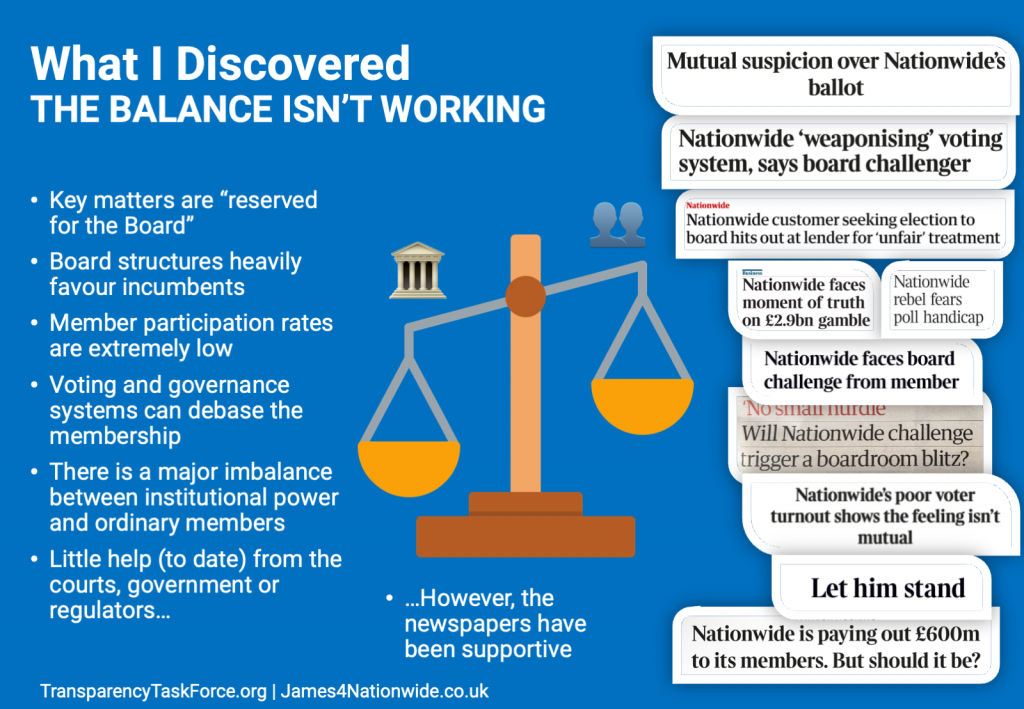
Slide 6 – What I Discovered
Key message
The balance of power appears heavily weighted toward the institution rather than ordinary members.
Examples
- Key decisions reserved to boards
- Very low voter participation
- Heavy reliance on Quick Vote
- Limited external challenge
Observation
Despite institutional resistance, media scrutiny has proven surprisingly effective.
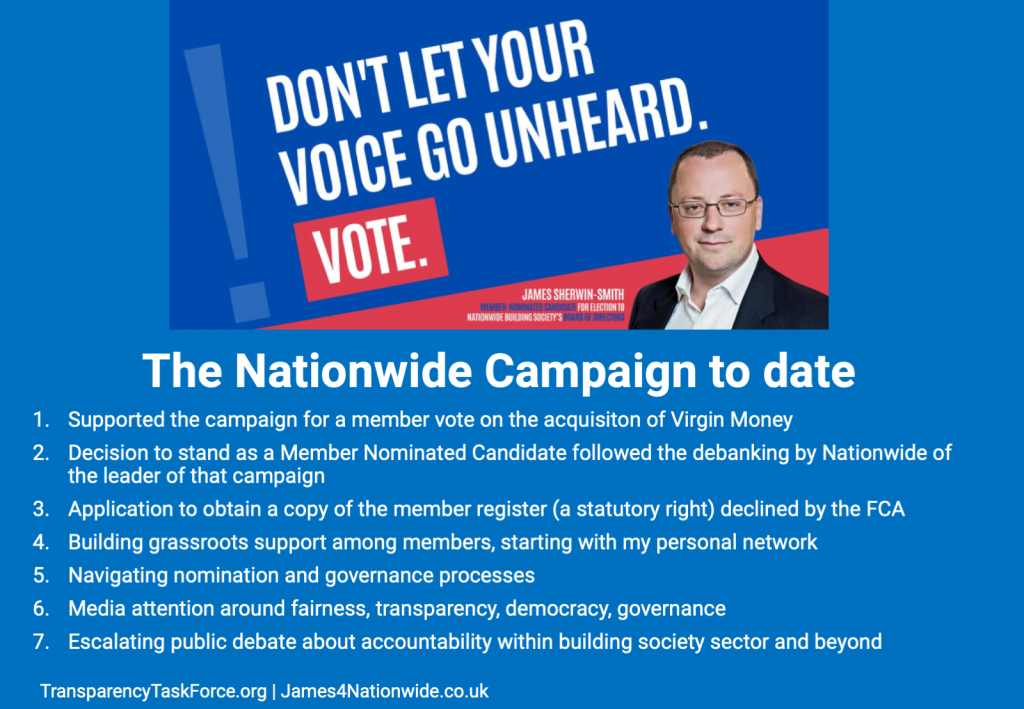
Slide 7 – The Campaign So Far
Key message
This campaign emerged from earlier efforts to secure a member vote on the Virgin Money acquisition.
Milestones
- Supported member-vote campaign
- Applied for access to the member register
- FCA rejected application
- Built grassroots support network
- Qualified for election ballot
Historic significance
First Member-Nominated Candidate on Nationwide’s ballot since 2005.
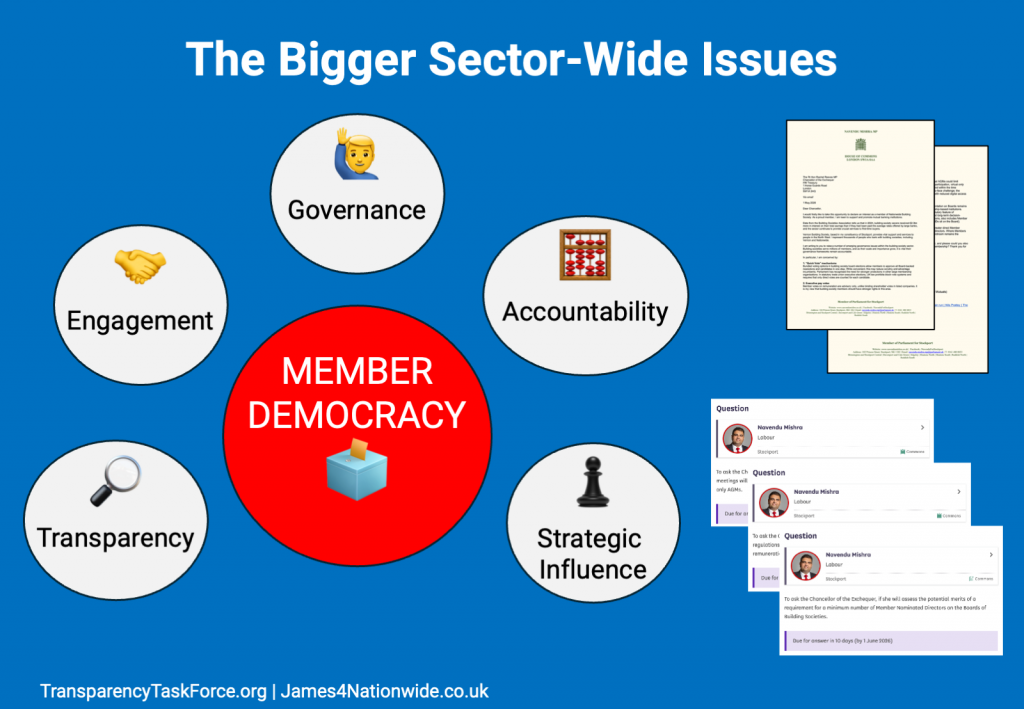
Slide 8 – The Bigger Sector-Wide Issues
Key message
This extends far beyond one organisation.
Themes
- Transparency
- Governance
- Accountability
- Engagement
- Strategic influence
Emerging political interest
Questions are now being raised in Parliament about governance arrangements within the building society sector.
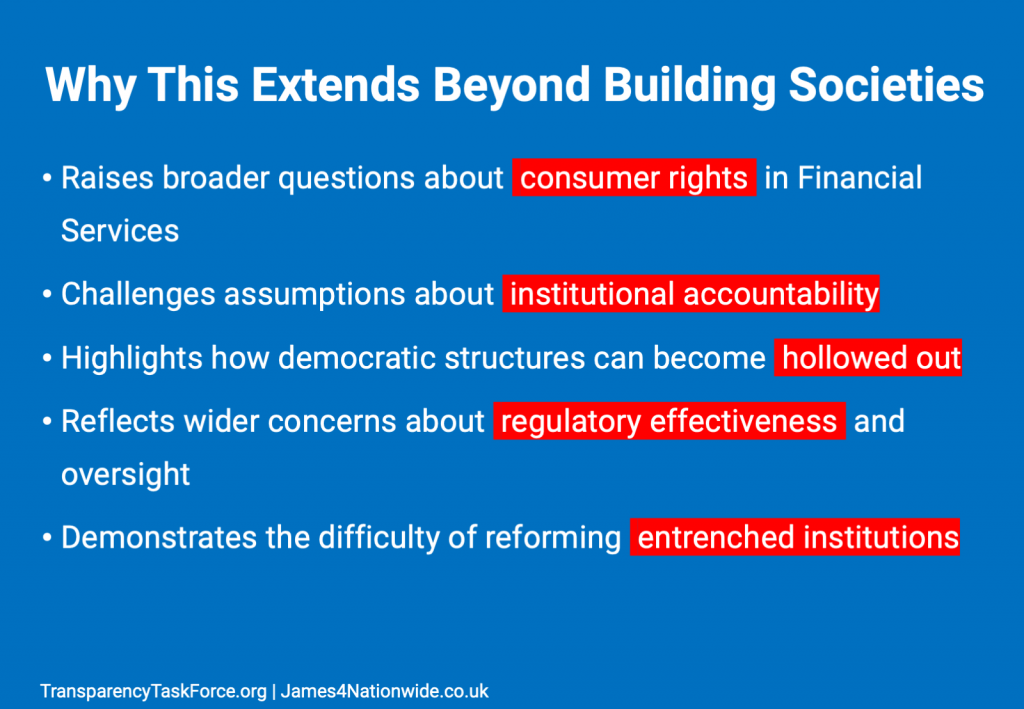
Slide 9 – Why This Extends Beyond Building Societies
Key message
The issues raised have implications for:
- Consumer rights
- Institutional accountability
- Regulatory effectiveness
- Democratic participation
Broader lesson
Democratic structures can become hollowed out gradually over time.
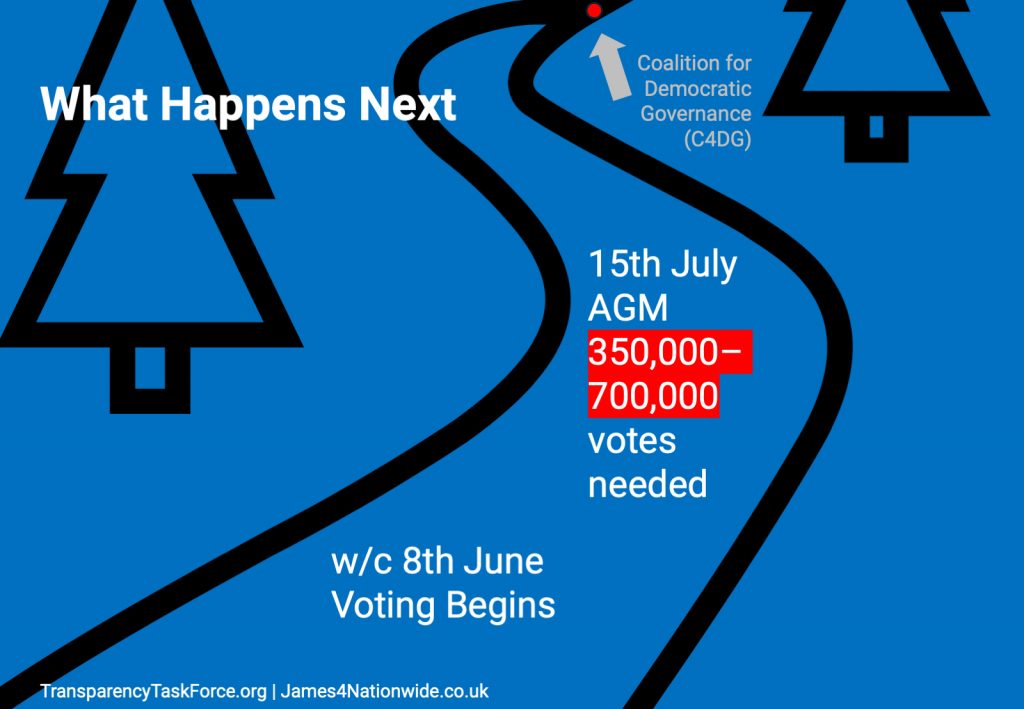
Slide 10 – What Happens Next
Key message
The challenge now moves from nomination to election.
Reality
Winning requires persuading hundreds of thousands of members to participate.
Longer-term vision
A Coalition for Democratic Governance (C4DG) bringing together organisations concerned with accountability, governance and democratic participation.
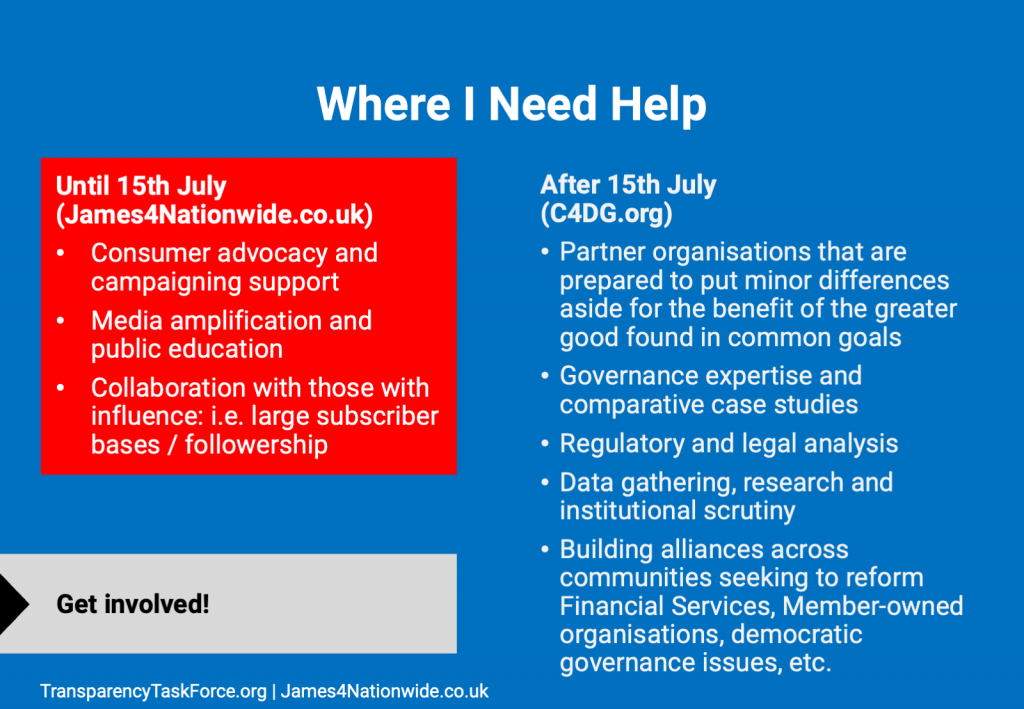
Slide 11 – Where Help Is Needed
Before the AGM
- Campaign support
- Consumer advocacy
- Media amplification
- Public education
After the AGM
Building a broader coalition around democratic governance and accountability.
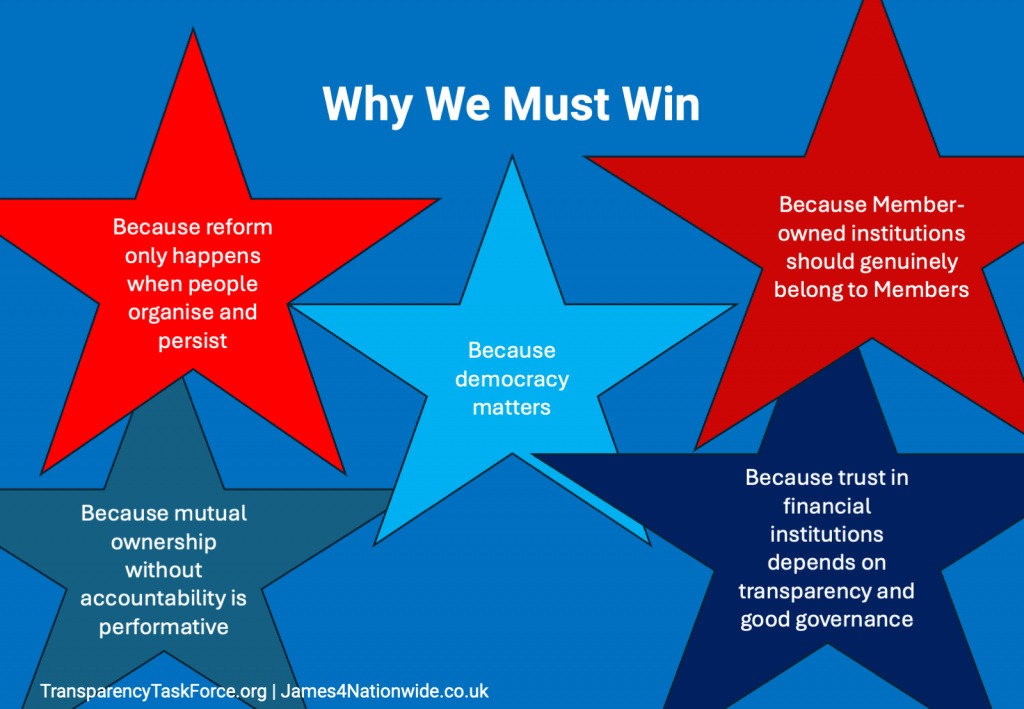
Slide 12 – Why We Must Win
Key message
This campaign is about more than a board seat.
Principles
- Mutual ownership requires accountability
- Reform requires persistence
- Democracy matters
- Trust depends on transparency and governance
- Member-owned organisations should genuinely belong to members
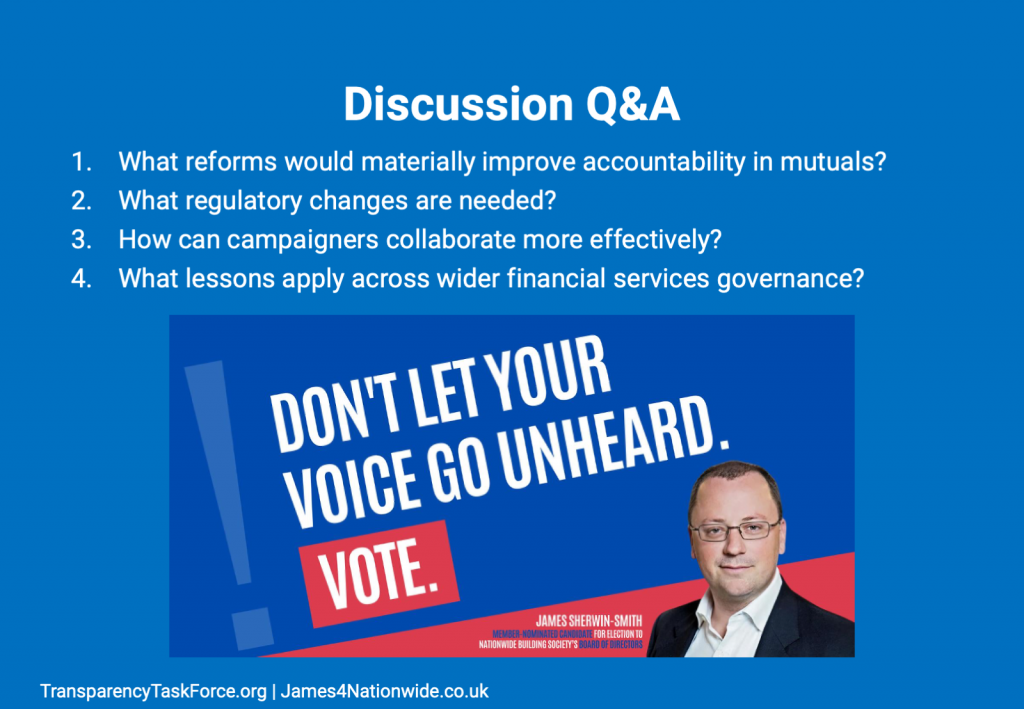
Slide 13 – Discussion and Q&A
Questions explored
- What reforms would strengthen mutual accountability?
- What regulatory changes are needed?
- How can campaigners collaborate more effectively?
- What lessons apply across financial services?
The discussion featured contributions from Transparency Task Force, ShareAction and Consumer Rights Solicitors.
Slide 14 – Stay Connected
Call to action
Follow the campaign:
- James4Nationwide.co.uk
- Subscribe to Email updates – and enter the Free Weekly Prize Draw for your chance to WIN a 🎈 £100 Random Share 🎈
- Follow on Social media
- WhatsApp community
Final message
Don’t let your voice go unheard. Vote.
But DO NOT USE THE QUICK VOTE.