
Statement from Alan Debenham
Alan Debenham was the last Member Nominated Candidate to appear on the Nationwide Building Society ballot before James Sherwin-Smith’s candidacy, standing for Election from 1999 to 2005
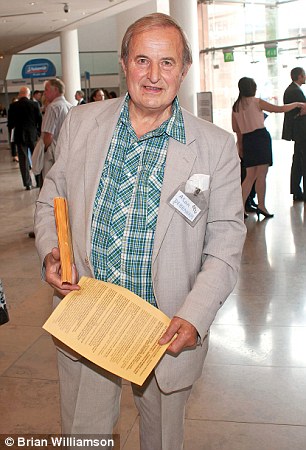
Statement from Alan Debenham, former Nationwide Member Nominated Candidate
From 1999 to 2005, I was free to give Members my phone number, email address and links to organisations I supported in my Election Address. In 2026, James Sherwin-Smith had information removed from his Election Address and Members are being warned against voting for him. That is not progress. It is a retreat from the principles of Member democracy that made Nationwide different. But my concerns don’t stop there.
I was the last candidate to stand as a Member Nominated Candidate for the Nationwide Building Society Board in 2005.
Having carefully read this year’s AGM and Election materials, I have been shocked and deeply disappointed by what I have seen.
In all my years following the Society’s governance, never before have we had a situation where official communications effectively tell Members not to vote for a particular candidate. That is a profoundly troubling development for a mutual organisation whose legitimacy rests on Member democracy.
Never before have we had these restrictions about what a candidate can put in their Election Address.
When I stood, I included my telephone number, email address and details of the Building Societies Members Association website within my Election Address. I do not understand why Nationwide believes it was appropriate to edit James Sherwin-Smith’s statement in this Election.
Restricting the information available to Members is a disturbing development and another blow to mutuality and democratic Member governance.
Members should be trusted to hear different viewpoints and make up their own minds. That is the essence of a mutual organisation. Elections are not strengthened by narrowing debate or limiting what candidates can say. They are strengthened by openness, fairness and confidence in the judgement of Members.
The issue at stake is whether Nationwide remains committed to the principles of “one member, one vote” democracy that have historically distinguished it from shareholder owned institutions.
For several years in a row, I received hundreds of thousands of Members’ votes in support. But the electoral system was biased against a Member candidate and I was not elected.
That bias continues today – but now in the form of the so-called “Quick vote”, which is presented by the Board as “convenient”. Convenient for whom – the Members seeking greater representation? Or the Boards acting to oppose this by weaponing the Quick vote for the first time in history against the first Member Nominated Candidate in over 20 years?
I, and the Building Societies Members Association (BSMA), have always opposed the Quick vote. We have often repeated and emphasised our communications with the line: DO NOT USE THE QUICK VOTE.
The Quick vote is not purely a Nationwide issue. It is a plague on democracy, nationwide.
Building societies are owned by their Members, they should not be kept at arm’s length. Independent voices have always had a place in mutual governance, and Members deserve the opportunity to hear those voices without interference.
I have never seen an Election conducted in this way before at Nationwide, and I fear the precedent it sets.
The Nationwide Board has historically opposed Member Nominated Candidates, seeking to portray them as interfering types wishing harm on the Society that Members themselves own.
Like James, I have only cared about true democracy, stronger member rights, more transparency and greater accountability. I have stood against so-called carpet baggers in the past. I, like James, want to see building societies flourish, and behave and act as mutuals. Instead they appear to pay lip service to the concept and treat it as a convenient source of differentiation if not a marketing gimmick.
Whatever Members think of James’s campaign, they should be concerned if the rules of engagement appear to change when an independent candidate seeks to challenge the status quo.
A confident mutual should welcome scrutiny, encourage debate and trust its Members.